
BIG TEN PRE-FALL-CAMP POWER RANKINGS
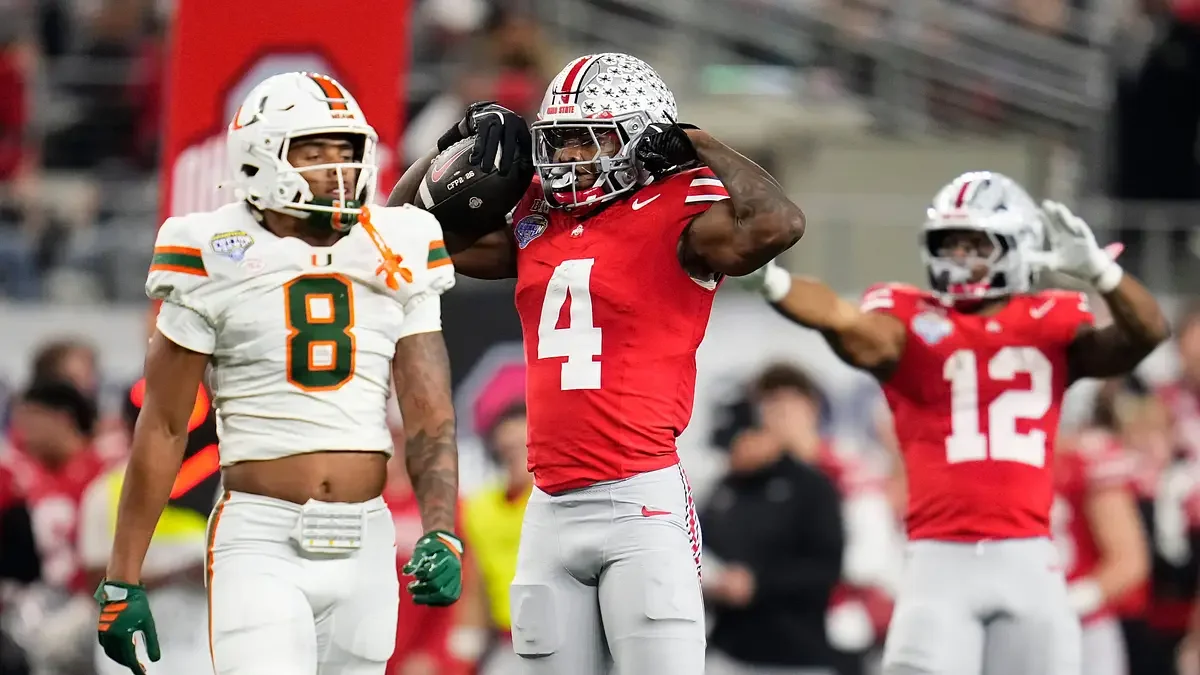
Ohio State Buckeyes wide receiver Jeremiah Smith (4) celebrates a first down beside Miami Hurricanes defensive back Jakobe Thomas (8) during the Cotton Bowl at AT&T Stadium in Arlington, Texas for the College Football Playoff quarterfinal game on Dec. 31, 2025. Ohio State lost 24-14. | Adam Cairns/Columbus Dispatch / USA TODAY NETWORK via Imagn Images. https://www.si.com/college/ohiostate/news/was-this-the-best-ohio-state-team-to-fall-short-of-the-national-championship-01kfevmdcb4m
The Big Ten enters the 2026 season with as much intrigue as any conference in college football. National title contenders, emerging challengers, and several programs looking to take the next step make for a league that appears deeper than ever heading into fall camp. While plenty can change once the games begin, returning production, transfer portal additions, coaching stability, and roster talent provide a strong foundation for evaluating where each team stands. With that in mind, here are my preseason power rankings of all 18 Big Ten programs entering the 2026 season.
Ohio State
We’ll start our power rankings up in Columbus with the Ohio State Buckeyes.
Few programs replace NFL talent as consistently as Ohio State. The Buckeyes have watched dozens of stars leave for the draft in recent years, yet elite recruiting has kept the roster among the deepest in the country.
The offense should once again be one of the nation's best, led by quarterback Julian Sayin and arguably the top player in college football, wide receiver Jeremiah Smith. Eight offensive starters return, providing continuity for a unit with championship potential. If Ohio State can quickly reload on defense, which is expected until proven otherwise, the Buckeyes have every piece necessary to compete for another Big Ten title and a spot in the College Football Playoff.
2. Oregon
The Ducks return one of the nation's most talented rosters and once again supplemented it with another strong transfer portal class. While replacing key NFL departures is never easy, Dan Lanning has built the type of program where elite recruiting and player development consistently replenish the roster.
College football has shown time and time again that elite quarterback play can elevate a team from conference contender to national championship threat. With Dante Moore opting to return instead of entering the NFL Draft, Oregon has all the pieces to compete for another Big Ten championship and a College Football Playoff berth, making the Ducks a deserving No. 2 in these rankings.
3. Indiana
It may come as a surprise to see the defending national champions ranked No. 3, and this projection could look foolish six months from now. But until Indiana proves it can consistently reload after losing significant talent, it's difficult to place the Hoosiers at the top.
That said, the ceiling remains incredibly high. Indiana landed one of the nation's top transfer quarterbacks in former TCU standout Josh Hoover, along with one of the portal's premier wide receivers in former Michigan State star Nick Marsh. If those additions live up to expectations and the Hoosiers reload as quickly as they rebuild, they could find themselves right back at No. 1 by season's end.
4. USC
2026 feels like the year for USC. On paper, this is the most talented roster Lincoln Riley has assembled since arriving in Los Angeles.
The Trojans took a significant step forward last season, finishing the regular season 9-3, but fell short of reaching the Big Ten Championship Game and the College Football Playoff. Now, USC returns 15 starters, including Big Ten passing leader Jayden Maiava, while bringing back one of the conference's deepest rosters. The talent is in place. For the Trojans, it's no longer about potential—it's about delivering results.
5. Washington
Washington at No. 5 may surprise some, but the Huskies have fewer question marks than several of the teams ranked behind them.
Jed Fisch enters his third season in Seattle with a veteran foundation, including four returning starters along the offensive line. One encouraging trend for Washington is Fisch's track record—every team he has coached improves the following season, giving the Huskies reason to believe another step forward is coming in 2026.
The biggest offseason storyline came when star quarterback Demond Williams attempted to enter the transfer portal before ultimately returning to the program. Whether that saga creates any lingering tension remains to be seen, but all signs point to Williams leading the Huskies onto the field in Week 1. If Washington can move past the offseason drama, it has the talent and the quarterback to contend near the top of the Big Ten.
6. Michigan
Michigan enters the 2026 season navigating significant change, with new leadership and fresh systems on both sides of the ball. Programs across college football have shown that transitions can be managed successfully—Utah under Kyle Whittingham is a prime example of sustained success through adaptability and strong culture. Michigan will look to follow a similar path as it reshapes its identity while maintaining its physical, defensive-minded foundation.
The biggest question is on offense. Former five-star quarterback Bryce Underwood enters his second season as the starter with enormous expectations, and if he develops as quickly as many believe he will under the new staff, Michigan could quickly become a legitimate Big Ten title contender. No. 6 feels like the right spot heading into fall camp.
7. Penn State
Penn State enters 2026 with a new era underway as Matt Campbell takes over as head coach, bringing a fresh vision to one of the Big Ten’s premier programs. Campbell will have help in his first year with veteran quarterback Rocho Becht transferring in with Campbell from Iowa State.
Becht wasn't the only one who followed. Penn State had the number one portal class in the Big Ten with 39 total commits, including 24 players who followed Campbell from Iowa State. That influx of familiar talent should help ease the transition and maintain continuity within the program.
The schedule also sets up favorably for Matt Campbell and the Nittany Lions. If everything comes together under the new coaching staff, expect Penn State to make some noise in 2026.
8. Nebraska
Nebraska hasn't quite broken into the upper echelon of the Big Ten, but the program is headed in the right direction under Matt Rhule. The Cornhuskers have shown steady improvement each season, and 2026 feels like another opportunity to build on that momentum.
After ending a seven-year bowl drought in 2025, the next step is proving Nebraska can become a consistent contender rather than simply an improved one. The departure of Dylan Raiola, who had become the face of Nebraska football, marked the end of an era in Lincoln. His transfer to Oregon opened the door for veteran quarterback Anthony Colandrea, who arrives with valuable starting experience after stints at Virginia and UNLV.
If Colandrea provides stability under center, the Cornhuskers have a chance to make some noise.
9. Iowa
Iowa enters 2026 facing a bit more uncertainty than usual, as the Hawkeyes return only six starters from last season’s roster. That kind of turnover suggests a likely step back, especially in a conference as deep as the Big Ten. While the program has built its identity on elite defense and special teams, replacing experienced contributors on both sides of the ball, mainly offense, will be a significant challenge.
Still, Iowa’s consistency under Kirk Ferentz makes it unlikely that the team will fall off a cliff. The Hawkeyes have a track record of developing players and maintaining a disciplined, physical style of play regardless of roster turnover. Even if the offense regresses and the defense takes time to reload, Iowa should remain competitive week to week and capable of grinding out wins, keeping it firmly in the middle tier of the conference rather than slipping toward the bottom.
10. Maryland
Here is where it gets tricky. Maryland enters 2026 with more questions than answers, especially given Mike Locksley’s 2-16 record against Big Ten opponents. That lack of success in conference play has made it difficult for the Terrapins to gain traction, but there are reasons for cautious optimism this season. Maryland returns 14 starters, providing a level of continuity that has been missing in recent years, and that experience could help stabilize the program.
The biggest concern remains consistency, but I personally think Maryland has a real shot to surprise people this season, which is why I have them at No. 10. The emergence of young quarterback Malik Washington offers hope, as he has shown promising flashes and could be the key to elevating the offense if he continues to develop. With more returning talent around him, Maryland has a chance to be more competitive.
11. UCLA
UCLA may not have one of the Big Ten's most talented rosters entering 2026, but the Bruins have a coach who knows how to win. Bob Chesney has built a reputation for turning programs around at every stop of his career, and UCLA is hoping that success translates to Westwood.
While the roster is still a year or two away from where the Bruins want it to be, the foundation is being built. UCLA has recruited well under Chesney and continues to add talent that should pay dividends in the coming seasons. Expectations should remain measured in 2026, but don't be surprised if the Bruins outperform preseason projections.
12. Illinois
Illinois has quietly become one of the Big Ten's most consistent programs under Bret Bielema. The Fighting Illini may not generate the same national attention as some of the conference's heavyweights, but they've built a physical, disciplined identity that makes them a difficult matchup every week.
The biggest challenge heading into 2026 is replacing several key contributors from last season's roster, as well as navigating significant turnover among the coaching staff. With so much of the roster and staff departing, there is a considerable amount of uncertainty surrounding how quickly Illinois can reload and maintain its identity.
13. Minnesota
Minnesota feels like one of the toughest teams in the Big Ten to project entering 2026. P.J. Fleck has consistently found ways to keep the Golden Gophers competitive, but this year's roster has them taking more of a wait-and-see approach compared to some of the teams ahead of them.
The Gophers will once again rely on their defense, but there is optimism thanks to a really promising young quarterback in Drake Lindsey who could elevate the offense. If the offense takes a step forward behind that young signal-caller, Minnesota has the potential to outperform this ranking.
14. Northwestern
One of the most underrated developments this offseason was the addition of Chip Kelly as offensive coordinator, bringing a proven, innovative mind to a unit that has struggled for consistency. Head coach David Braun also made a significant move at quarterback by landing Aiden Chiles from Michigan State, giving the offense a talented and dynamic presence under center.
With the new offensive leadership and an upgraded quarterback situation, Northwestern could make some noise this year.
15. Purdue
Purdue enters 2026 hoping to make a significant jump in Barry Odom's second season at the helm. Year 1 was always going to be about laying the foundation, and now the focus shifts to turning that culture into tangible results on the field.
The Boilermakers still have work to do before they can consistently compete with the Big Ten's top programs, and their current 18-game conference losing streak underscores just how far they have to go, but there are reasons for optimism. Another offseason in Odom's system, combined with additions through the transfer portal and another recruiting class, should leave Purdue in a better position than it was a year ago.
16. Wisconsin
Wisconsin enters 2026 under pressure to show meaningful progress. Expectations are always high in Madison, and after several inconsistent seasons, the program is slowly dying.
After last season proved to be very underwhelming, the administration made it clear it would commit additional resources to the football program, signaling a renewed push to compete at a higher level. That investment has only increased the pressure on head coach Luke Fickell to deliver results. Wisconsin returns key contributors on both sides of the ball and has continued to invest heavily through the transfer portal, but the biggest question remains whether the offense can finally find the consistency it has lacked in recent years.
17. Rutgers
Rutgers enters 2026 with plenty of questions surrounding the Scarlet Knights and a bleak roster outside of a few players.
The biggest storyline is at quarterback, where Boston College transfer Dylan Lonergan takes over and will attempt to live up to Athan Kaliakmanis'. He'll have plenty of help thanks to the return of leading receiver KJ Duff and standout running back Antwan Raymond, but the defense must improve after struggling mightily throughout 2025.
18. Michigan State
Starting with the new guy last. Michigan State begins another new chapter with Pat Fitzgerald returning to the Big Ten, but rebuilding the Spartans into a contender won't happen overnight. The program has spent the past several seasons searching for stability, and after making a splash hire with Jonathan Smith, Michigan State is once again starting over following his departure. Fitzgerald inherits a program that is essentially back at square one.
The offseason brought sweeping roster changes, a necessary step for a program looking to reset its trajectory. Realistically, it may take a season or two before the Spartans truly find their footing again in the Big Ten and begin to climb back toward contention.